


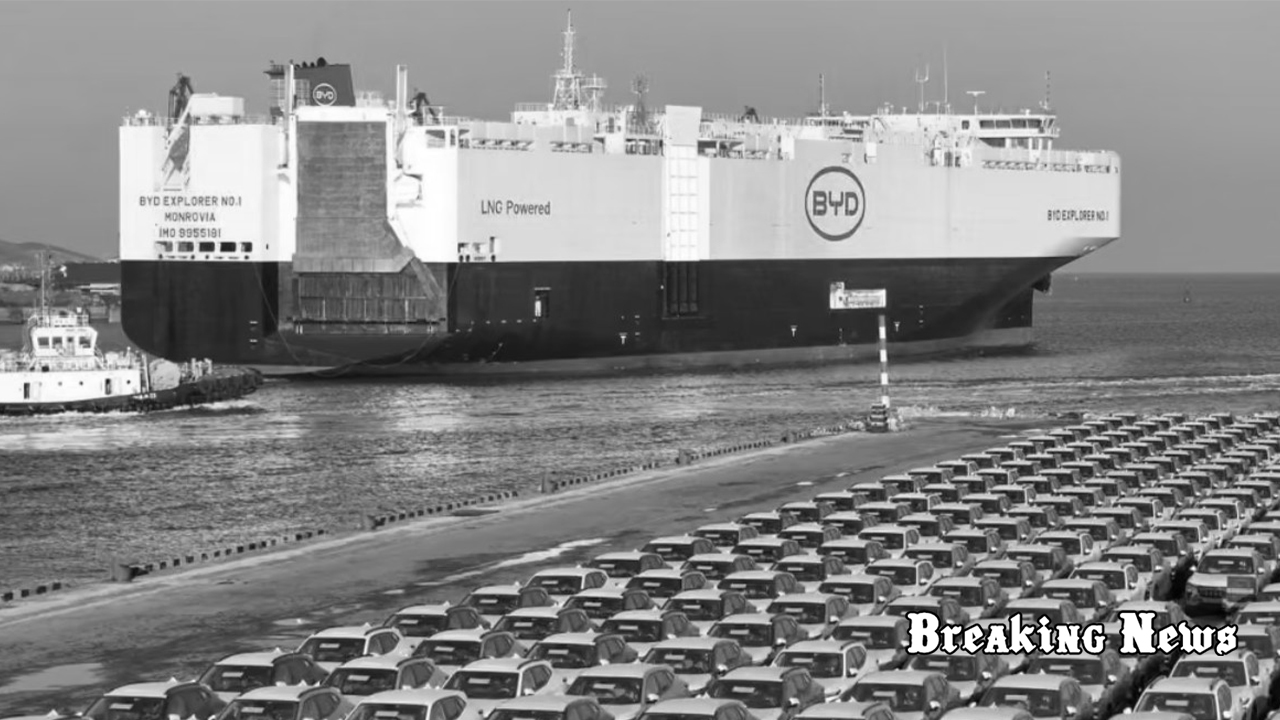
The European Commission plans to hold urgent talks on the possible tightening of restrictions on imports of goods from China. In Brussels, concerns are growing that a massive influx of cheap Chinese products could negatively affect European industry and contribute to the emergence of a European equivalent of the American “Rust Belt.”
Source: Bukvy
The issue concerns a significant increase in shipments of a wide range of goods — from electric vehicles and chemical components to machine parts, medical products, and food items. In the EU, this phenomenon is already being referred to as a “China Shock 2.0,” compared to the consequences the United States experienced after China joined the WTO over 20 years ago.
According to sources, no concrete decisions are expected at the Friday meeting. The main goal is to coordinate the European Commission’s approach to the issue of overproduction in China, which leads to some goods entering the EU market at prices up to 40% lower than those of European producers.


Commissioners have been asked to prepare examples of China’s impact across all key EU policy areas — from trade and agriculture to defense, healthcare, and the digital sector. The issue is also expected to be discussed at the EU leaders’ summit on June 18.
Former European Commission trade official Ignacio García Bercero believes the EU needs a clearer strategy toward China. Among possible tools, he mentions quotas or tariff quotas, which can be introduced faster than traditional tariffs, focusing on specific sectors such as hybrid vehicles and chemical components.
At the same time, he emphasizes that the EU should not only protect its market but also continue dialogue with China — similar to the approach taken by the United States and Canada.
In the long term, the EU may also use other instruments, including the anti-coercion mechanism, new cybersecurity rules, and the “made in EU” industrial law.




Discussion about this post