
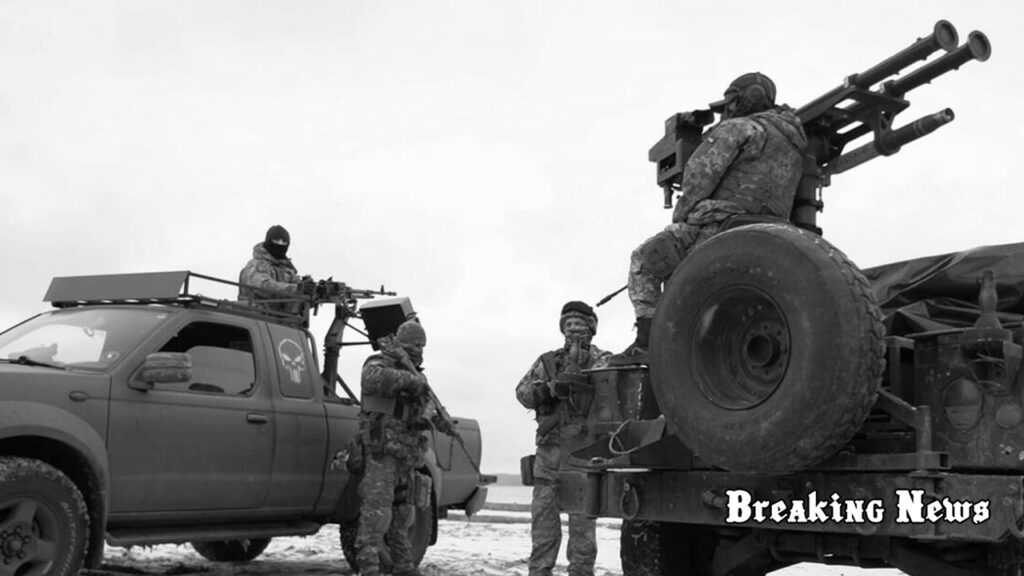
Over the past three months, the Russian military carried out 14 massive strikes on Ukrainian regions. The Air Forces stated that winter posed a challenge for the air defense system.
Source: PRYAMYI
“The occupiers once again attempted to impose a total blackout on Ukrainians and destroy the country’s critical infrastructure by using an unprecedented number of missiles and drones,” the report said.
Specifically, during December-January, Ukrainian air defense repelled 7 massive attacks, and in February — the same number. The enemy combined strikes using attack drones and missiles of various types to complicate the work of Ukrainian air defense and exhaust its resources.
On December 6, the Russian army carried out the largest strike on Ukraine since the beginning of the full-scale invasion, using 704 aerial targets, including 51 missiles.
As noted by the Air Forces, in December the enemy maintained an “extremely high level of load,” employing from almost 500 to over 670 aerial targets during the attacks.
January became a period of intensive ballistic missile use. This month, the Russians struck with “Oreshnik” and “Zircon” missiles.
In February, the occupiers launched the largest number of missiles in a single strike throughout the winter — 71 units.
Among other warnings, the Air Forces noted that the enemy is increasing the use of “Iskander-M,” “Kinzhal,” “Zircon,” Kh-22/32, S-300/S-400 missiles. Over three months, more than 700 missiles of various types were used.
“Despite these challenges, the Ukrainian sky has held. The energy system has been preserved thanks to the professionalism of the anti-aircraft missile troops, mobile fire groups, radio-technical troops, aviation, and unmanned systems units. Every intercepted missile is proof that we have become stronger, more technological, and more experienced,” the press service emphasized.