
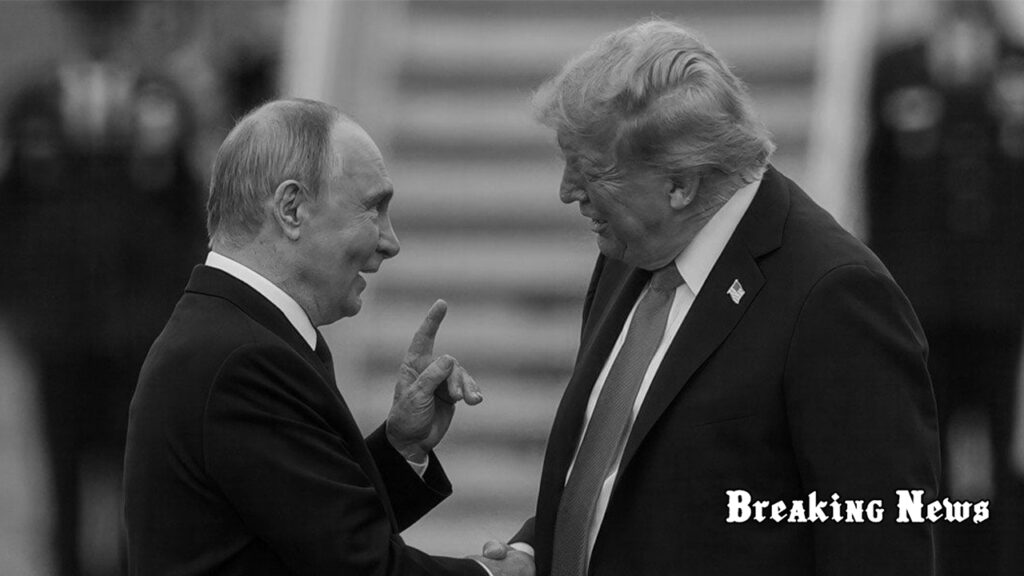
🇺🇸 When Russia launched its full-scale invasion of Ukraine in 2022, Donald Trump called it a “genius” decision. However, as Financial Times columnist Edward Luce notes, Russia’s war against Ukraine has become one of the most costly strategic mistakes of modern times — alongside U.S. actions in the Middle East.
Source: Censor.NET
In the article titled “Neither Putin nor Trump has the cards,” the author draws parallels between the political miscalculations of Vladimir Putin and Donald Trump, arguing that both leaders underestimated their opponents and overestimated their own capabilities.
According to Luce, both the Kremlin and Washington expected quick results from their decisions, but instead became involved in prolonged conflicts with significant long-term costs that will persist well beyond their time in power. Meanwhile, China appears to be among the main beneficiaries of global shifts.
The columnist notes that Ukraine has significantly changed the battlefield situation, turning the front line into a costly war of attrition for Russian forces. Each month, according to estimates cited, Russia suffers tens of thousands of casualties, while Ukraine continues to expand its strike capabilities deep behind enemy lines.
It is also emphasized that Ukraine is gradually strengthening its position in relations with the United States through the development of its own technologies, particularly in drones and air defense systems.
Luce argues that Russia’s strategic miscalculations have contributed to NATO expansion and the strengthening of the Alliance, as neighboring countries increasingly seek Western security guarantees.
He also draws a parallel with U.S. policy toward Iran, noting that attempts at quick solutions and force-based pressure have failed to deliver expected results and have only complicated the situation in the region.
According to the author, the global balance is gradually shifting: major powers are facing the consequences of their own decisions, while middle-sized countries, including Ukraine, are gaining more room to influence international politics.