


After his visit to China, where Putin held talks with Xi Jinping, international analysts note an increase in the Kremlin’s aggressive actions.
Source: PRYAMYI
According to The Times, the airstrike on Kyiv that occurred shortly after Putin’s return to Moscow may signal the start of a new phase of the war.
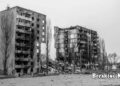
This strike was one of the largest during the entire period of the full-scale invasion. For the first time in three years, a government building in the Ukrainian capital—an object long referred to in Russian rhetoric as the “decision-making center”—came under missile attack. This symbolic gesture by the Kremlin is seen as a demonstration of readiness to move into an even harsher phase of the conflict.

Putin’s meeting with the leaders of China and North Korea in Beijing was accompanied by a joint viewing of a military parade, which observers considered a landmark event. It was the first time in decades that leaders of the three authoritarian states publicly gathered together. The Times notes that Putin sat to the right of Xi Jinping, which experts interpret as an acknowledgment of a certain subordination of Moscow in its partnership with China.
Although Beijing is not directly involved in the war, China provides Russia with diplomatic cover, does not participate in sanctions, and actively develops economic cooperation. One example is the promotion of the “Power of Siberia-2” gas pipeline project, which will allow Russia to redirect energy supplies from the West to the East.
During his trip to China, Putin also outlined his vision of the future world order, stating that Western dominance is coming to an end and the world is becoming “multipolar.” The Times notes that this statement aligns with the Kremlin’s long-standing strategy to undermine Western influence.
Discussion about this post