
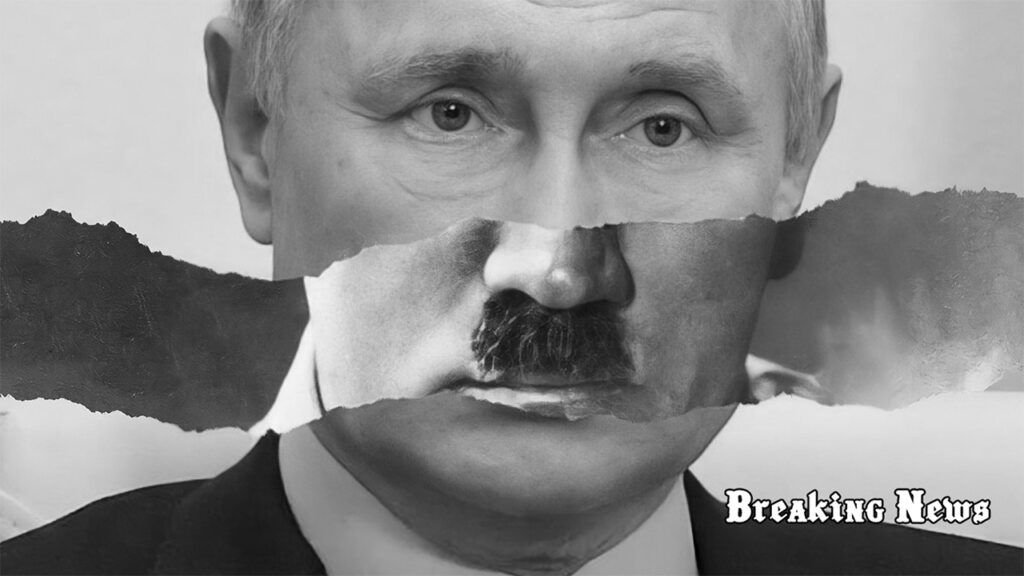
On the territory of Ukraine, a war crime of staggering proportions is unfolding, as Russia targets energy infrastructure with the aim of freezing millions of peaceful Ukrainians in their homes and provoking a humanitarian catastrophe.
Source: Bukvy
Russia has repeatedly attacked Ukraine’s energy infrastructure since the full-scale invasion began, but today’s attacks are the largest of the entire war.
In recent months, Russian attacks on civilian targets have sharply escalated, as the Kremlin seeks to inflict maximum harm on Ukraine’s population by depriving them of heating, electricity, gas, and water during the coldest period of the winter season.
The consequences have been devastating, especially since most residential areas in Ukrainian cities still rely on central heating systems powered by massive power plants, which are nearly impossible to protect. The Kremlin exploits this vulnerability, repeatedly targeting the same facilities to disrupt repair efforts.
Although Ukrainian energy teams continue to work miracles, each subsequent attack makes their task more difficult.
Ukrainians have responded to plunging temperatures and freezing apartments with a range of improvised solutions. There has also been much of the typical Ukrainian wartime defiance: local communities band together for mutual support, post lighthearted videos on social media, and even hold street parties in the snow.
At the same time, many have expressed frustration at the media’s constant focus on Ukrainian resilience amid a growing humanitarian crisis.
“Resilience does not mean immunity. Ukraine cannot endure everything indefinitely. Presenting this only as a story of strength risks dulling the urgency of what is happening,” wrote Ukrainian commentator Iryna Voichuk on January 16.
Others share this view, including some of Ukraine’s most prominent international supporters.
“Mythologizing endurance is a quiet form of abandonment. Resilience does not mean invulnerability. When we speak as if Ukrainians can just ‘cope,’ we absolve ourselves of responsibility,” warned Megan Mobbs, President of the R.T. Weizerman Foundation, in a recent post.
With freezing temperatures expected to continue into February, the situation in Ukraine is critical. In the high-rise buildings that dominate Ukrainian cities, many less mobile residents have already been confined to their homes for weeks and are likely to remain trapped in the freezing darkness for the next month.
The outlook is particularly severe for the elderly, households with young children, and those requiring medical care. In other words, Russia’s current bombing strategy appears deliberately designed to target the most vulnerable members of Ukrainian society.
As the potential for mass casualties becomes increasingly apparent, the international audience is beginning to grasp the true scale of Russia’s criminal intent.
The Wall Street Journal’s chief foreign correspondent, Yaroslav Trofimov, recently described Russia’s winter bombing campaign as “Putin’s genocidal efforts to make Kyiv uninhabitable.” The 1948 UN Genocide Convention defines “deliberately creating conditions of life for a group intended to bring about its complete or partial physical destruction” as one of five recognized acts of genocide. At the very least, Russia’s current actions closely resemble this definition.
The ongoing winter bombing campaign reflects a broader trend of intensifying Russian attacks on Ukraine’s civilian population. According to the UN, 2025 was the deadliest year of the war for Ukrainian civilians since 2022, with over 2,500 killed and more than 12,000 injured. This is a 31% increase from the previous year and 70% higher than in 2023. Many of these deaths resulted from a surge in Russian missile and drone strikes targeting civilian infrastructure, including residential buildings, hospitals, and playgrounds.
Russia has also been accused of conducting a systematic campaign of drone strikes targeting populations in frontline areas of southern Ukraine. These attacks, described as a “human safari,” involve drones equipped with video guidance systems to hunt specific individuals, highlighting the deliberate nature of the killings.
A UN investigation in October 2025 into these drone attacks found Russia guilty of “systematically coordinated actions aimed at displacing Ukrainians from their homes” and concluded that Kremlin actions in southern Ukraine constitute crimes against humanity: murder and forced displacement of civilians.
Putin is sharply escalating attacks on Ukraine’s civilian population because he cannot win the war on the battlefield. When he launched the full-scale invasion of Ukraine in February 2022, he expected a swift and complete victory. Instead, his army became bogged down in a brutal war of attrition.
Despite enormous resources dedicated to the invasion and mobilizing the entire country for war, Putin failed to secure a decisive breakthrough. Many in Moscow had hoped that Donald Trump’s return to the White House would change the military situation, but even a sharp reduction of U.S. aid to Ukraine last year did not shift the balance in Russia’s favor.
The Russian army captured less than one percent of Ukrainian territory in 2025, suffering hundreds of thousands of casualties. At the current pace, it would take Russia decades and millions of people to fully subjugate Ukraine.
In official statements, Putin continues to project confidence and boast of his army’s successes. However, given the paucity of real victories, these claims often involve fabricated achievements.
Putin’s habit of exaggerating Russian gains resurfaced at the end of 2025, when he repeatedly claimed the capture of the Ukrainian city of Kupiansk, only for Ukrainian President Volodymyr Zelensky to personally visit the city and record a video exposing Putin’s falsehoods.
This episode highlighted the growing gap between Putin’s bold rhetoric about Russia’s inevitable victory and the reality on the battlefield, where Russian gains are minimal and losses catastrophic.
With no clear path to military victory, Putin is now openly employing a strategy of terrorist tactics against Ukraine’s civilian population. He hopes that by using winter as a weapon and risking millions of lives, he can finally break Ukrainian resistance and force Ukraine to capitulate. Europe has not seen criminality of this scale since the times of Hitler and Stalin.
So far, the international response to Russia’s winter bombing campaign has been completely inadequate. While many of Kyiv’s partners rushed to provide humanitarian aid, the Kremlin has faced no additional consequences.
Instead, it is Ukraine, not Russia, that is being asked to make concessions. If this does not change, the normalization of Russian war crimes will continue, and Putin’s sense of impunity will deepen further. It will then only be a matter of time before other civilian populations experience the horrors currently unfolding in Ukraine.